
What Is a Moon Mass Driver? Elon Musk Explains
Elon Musk’s latest post about Moon mass drivers sparked interest across the space community. Discover what a lunar mass driver is, how it works, and why it could transform future space exploration.
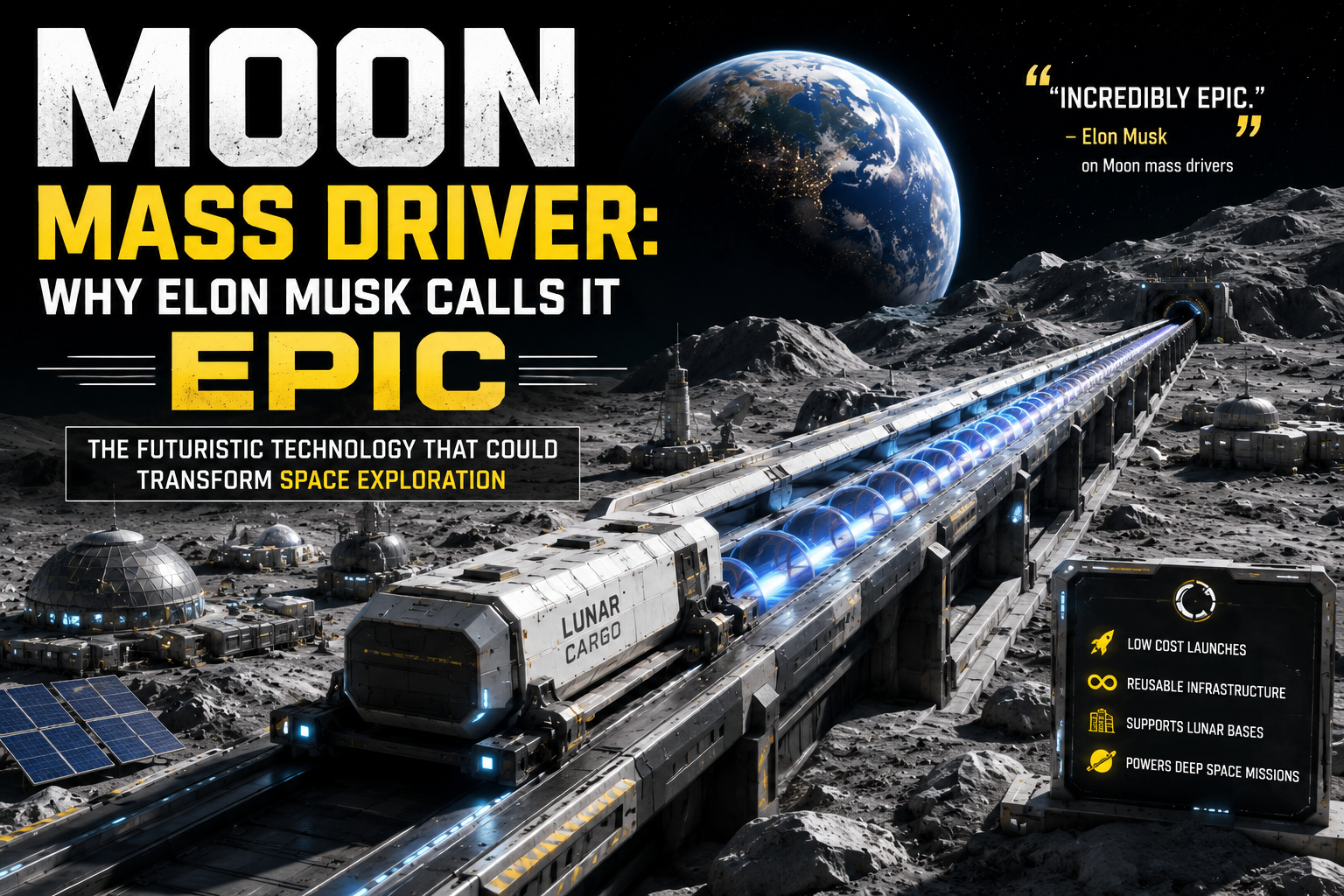
Moon Mass Driver: Why Elon Musk Calls It Epic
Elon Musk's recent comment about Moon mass drivers sparked excitement among space enthusiasts and engineers alike. But what exactly is a Moon mass driver, how does it work, and why could it become one of the most important technologies for humanity's future in space? This guide explains the science, potential benefits, and challenges behind this fascinating concept.
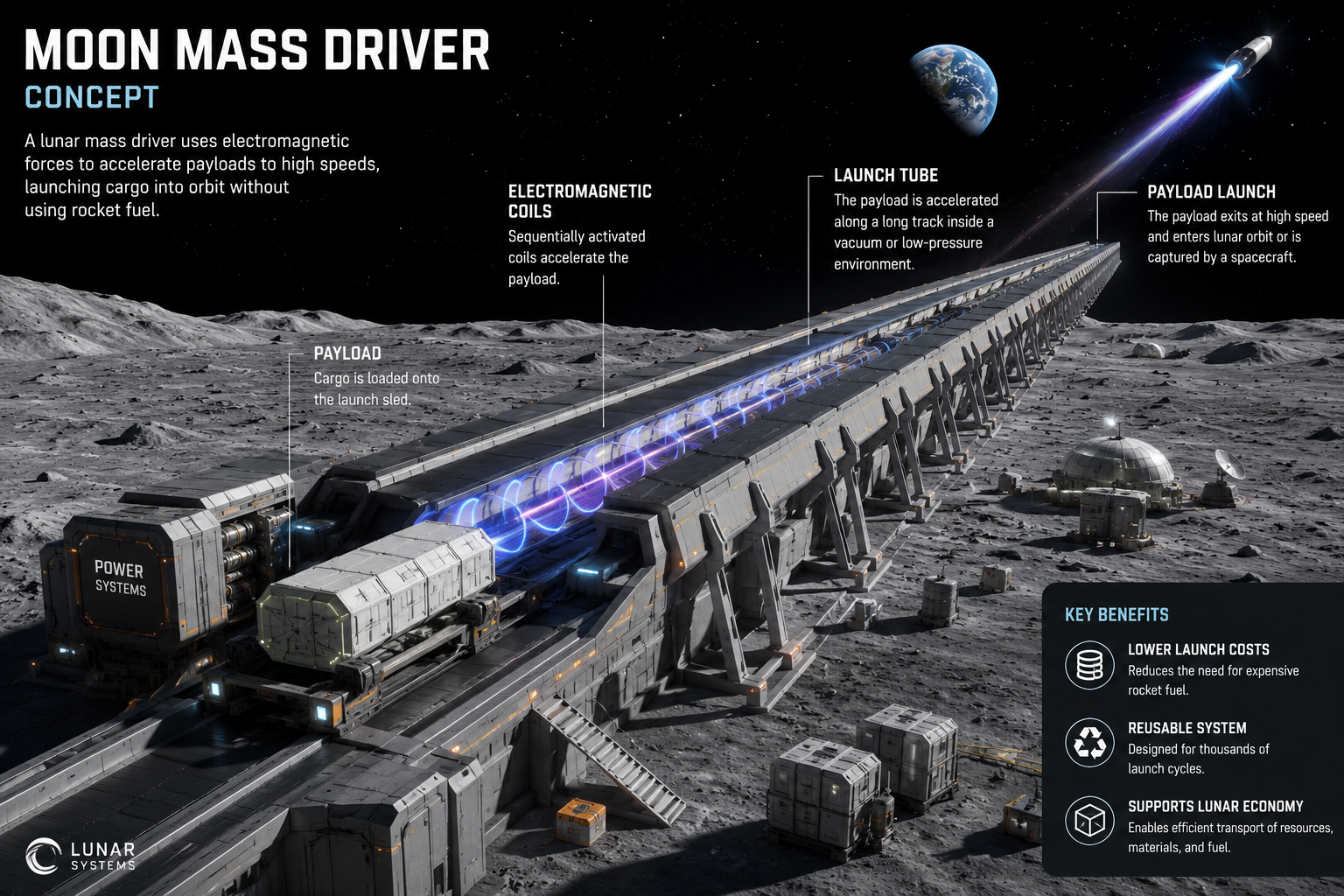
Table of Contents
- Introduction
- Elon Musk's Comment on Moon Mass Drivers
- What Is a Moon Mass Driver?
- How Does a Moon Mass Driver Work?
- Why Build a Mass Driver on the Moon?
- Potential Benefits
- Engineering Challenges
- SpaceX and Lunar Exploration
- Moon Mass Drivers vs Traditional Rockets
- Frequently Asked Questions
- Final Thoughts
Introduction
Space exploration has always required enormous amounts of energy and fuel. Every kilogram launched from Earth must overcome Earth's strong gravity, making missions extremely expensive.
One proposed solution is the Moon mass driver—a giant electromagnetic launcher capable of sending cargo from the Moon into space without using traditional rockets.
The idea has existed for decades, but it recently gained renewed attention after Elon Musk responded positively to a discussion about lunar mass drivers, calling the concept:
"Incredibly epic."
You can read Musk's original comment on X (formerly Twitter) here:
👉 Elon Musk's Moon Mass Driver Post on X
His short comment quickly spread across the space community, encouraging discussions about future Moon bases and the technologies that could support long-term human exploration.
Elon Musk's Comment on Moon Mass Drivers
During a discussion on X (formerly Twitter) about lunar infrastructure, Elon Musk responded to a post discussing the possibility of building electromagnetic launch systems on the Moon.
You can view the original post here:
👉 Read Elon Musk's original post on X
Although Musk's reply was brief, many engineers and space enthusiasts viewed it as another indication that advanced lunar infrastructure may become an important part of humanity's future beyond Earth.
What Is a Moon Mass Driver?
A Moon mass driver is an enormous electromagnetic launch system designed to accelerate cargo to very high speeds without using chemical rocket engines.
Instead of burning fuel, a mass driver uses electricity and magnetic forces to propel an object along a long track.
Think of it as an extremely powerful electromagnetic rail system designed for space.
The concept is similar to:
- Railguns
- Electromagnetic launch systems
- Magnetic levitation (Maglev)
- Coilguns
Instead of launching weapons, however, a Moon mass driver would launch useful cargo into space.
How Does a Moon Mass Driver Work?
A simplified process looks like this:
| Step | Description |
|---|---|
| 1 | Cargo is loaded onto a launch vehicle. |
| 2 | Electromagnets accelerate the vehicle along a track. |
| 3 | The vehicle reaches extremely high speeds. |
| 4 | Cargo leaves the Moon without using rocket fuel. |
| 5 | Spacecraft collect the cargo in orbit or transport it elsewhere. |
Because the Moon has only about one-sixth of Earth's gravity, launching objects requires significantly less energy than launching them from Earth.
Why Build a Mass Driver on the Moon?
Launching materials from Earth is expensive because rockets must fight Earth's gravity.
A Moon mass driver could dramatically reduce the cost of transporting resources into space.
Possible cargo includes:
- Construction materials
- Water ice
- Oxygen
- Scientific equipment
- Lunar minerals
- Fuel for spacecraft
Future Moon bases could use this technology to supply missions traveling deeper into the Solar System.
Advantages of Moon Mass Drivers
Lower Launch Costs
Electricity is generally cheaper than constantly producing chemical rocket fuel.
Less Fuel Required
Traditional rockets carry enormous amounts of fuel.
Mass drivers rely primarily on electrical energy instead.
Reusable Infrastructure
Unlike disposable rocket stages, a mass driver could launch many payloads using the same infrastructure.
Supporting Lunar Bases
Future Moon settlements may need regular transportation of equipment and supplies.
A permanent launch system could make these operations far more efficient.
Preparing for Mars Missions
Some scientists believe Moon infrastructure could support future missions to Mars by reducing launch costs and simplifying logistics.
Engineering Challenges
Despite its advantages, building a Moon mass driver would be extremely difficult.
Some challenges include:
- Massive construction requirements
- Reliable power generation
- Precision engineering
- Dust management on the lunar surface
- Long electromagnetic tracks
- Payload safety during acceleration
These challenges mean the technology remains a concept rather than an operational system today.
SpaceX and Lunar Exploration
Although SpaceX has not announced plans to build a Moon mass driver, the company is actively developing technologies that could support future lunar exploration.
Examples include:
- Starship
- Lunar landing systems
- Reusable spacecraft
- Deep-space transportation
SpaceX's Starship is designed to transport cargo and crews to the Moon, Mars, and beyond. Its fully reusable design is intended to reduce launch costs and enable long-term human exploration of space.
Learn more about Starship on the official SpaceX website:
👉 https://www.spacex.com/vehicles/starship/
NASA is also preparing to return astronauts to the Moon through the Artemis Program, which aims to establish a sustainable human presence on the lunar surface.
Official Artemis information:
👉 https://www.nasa.gov/artemis/
If permanent Moon bases become a reality, technologies like mass drivers could become increasingly relevant for transporting supplies and resources into lunar orbit.
Moon Mass Drivers vs Traditional Rockets
| Feature | Moon Mass Driver | Chemical Rocket |
|---|---|---|
| Fuel Required | Very Low | Very High |
| Reusable | Mostly Yes | Partially |
| Launch Cost | Potentially Lower | High |
| Infrastructure | Very Expensive | Existing Technology |
| Best Use | Cargo | Cargo & Humans |
Mass drivers are generally considered better suited for transporting cargo rather than human passengers because of the high acceleration involved.
Why Space Enthusiasts Are Excited
The idea of a Moon mass driver captures attention because it represents a future where humanity builds permanent infrastructure beyond Earth.
Instead of launching everything from Earth forever, future civilizations could manufacture and transport resources directly from the Moon.
This vision aligns with long-term goals discussed by many scientists and space advocates.
Frequently Asked Questions
Has a Moon mass driver been built?
No.
The concept has been studied for decades, but no operational Moon mass driver currently exists.
Could people ride a Moon mass driver?
Current concepts are generally intended for cargo rather than human passengers because of the intense acceleration.
Why is the Moon a good location?
The Moon's lower gravity makes launching objects much easier than from Earth.
Does Elon Musk plan to build one?
Elon Musk has publicly commented that the idea is "incredibly epic," but there has been no official announcement that SpaceX plans to build a Moon mass driver.
Could Moon mass drivers help missions to Mars?
Potentially.
If resources can be launched from the Moon more efficiently, future deep-space missions could benefit from lower transportation costs.
Final Thoughts
Moon mass drivers remain one of the most exciting ideas in future space engineering.
Although the technology is still theoretical, advances in reusable rockets, lunar exploration, and permanent Moon infrastructure continue to bring concepts like this closer to reality.
Elon Musk's brief comment reignited public interest in an idea that has fascinated scientists and engineers for decades.
Whether Moon mass drivers become part of humanity's future remains to be seen, but they represent the kind of ambitious engineering that could transform space exploration.
Article Summary
- Learn what a Moon mass driver is.
- Understand how electromagnetic launch systems work.
- Discover why Elon Musk called the concept "epic."
- Explore the benefits and challenges of lunar launch systems.
- Compare Moon mass drivers with traditional rockets.
- Learn how this technology could support future Moon and Mars missions.
Related Resources
Continue exploring the future of space exploration with these official resources:
- Elon Musk's original Moon mass driver post: https://x.com/elonmusk/status/2078368917404151868?s=46
- NASA Artemis Program: https://www.nasa.gov/artemis/
- NASA Moon Science: https://science.nasa.gov/moon/
- SpaceX Starship: https://www.spacex.com/vehicles/starship/
Related Reading
- Future Moon Bases
- How SpaceX Starship Could Change Space Travel
- NASA Artemis Missions Explained
- Electromagnetic Launch Systems
- Mars Colonization Concepts